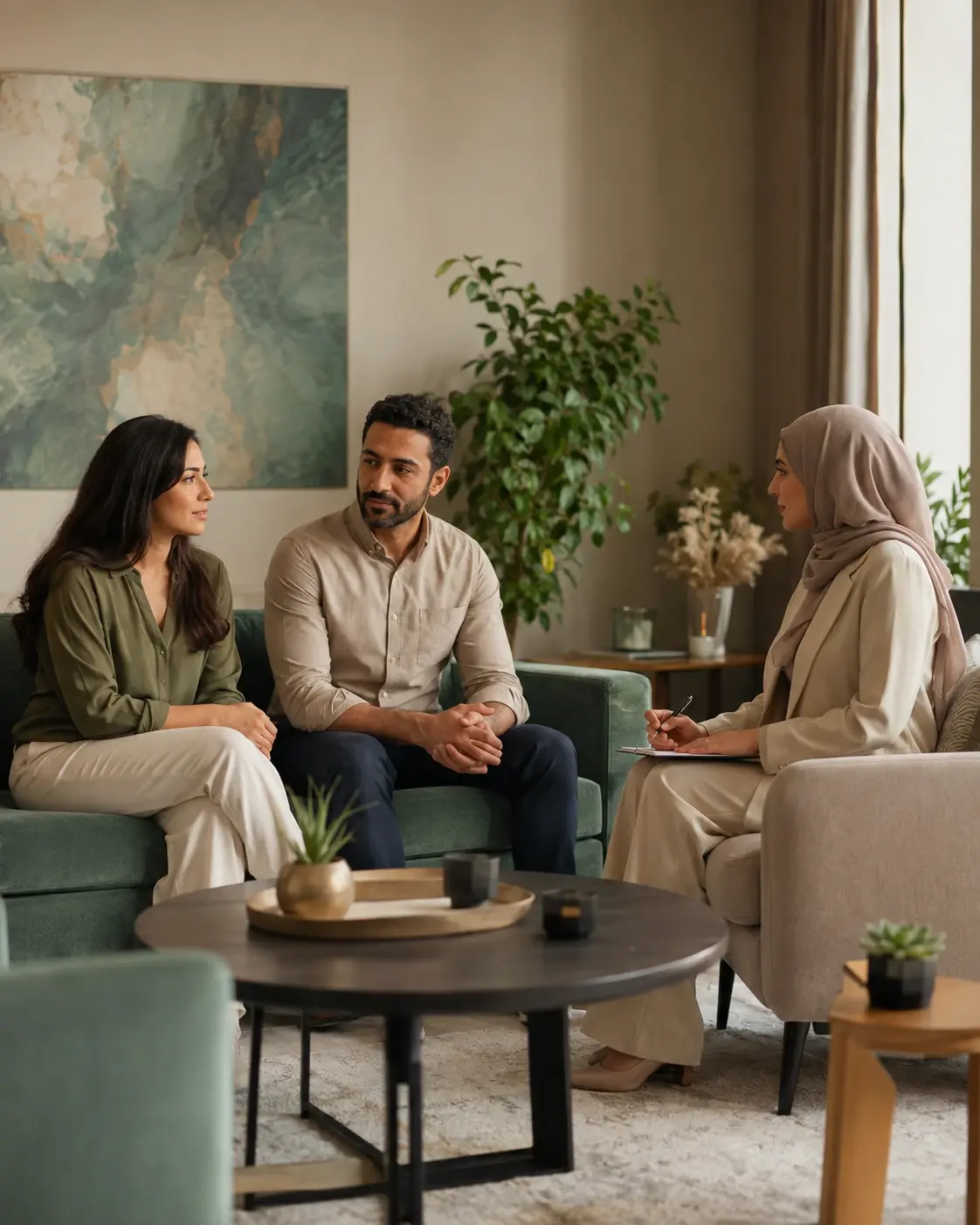


In short: There is no single “best couples therapist” for every relationship. A better choice is a professional whose qualifications, training and experience match the concerns you and your partner want to address. Experience working specifically with couples, professional fit, safety, session format, fees and availability should all be considered before booking.
People often start searching for the best couples therapist in Egypt after communication becomes difficult, the same arguments keep returning, trust has been damaged, or both partners feel stuck despite repeatedly trying to solve the problem themselves.
But choosing a couples professional should involve more than ratings or popularity.
This Mental Care guide explains how to compare couples and relationship specialists and choose a professional who is more suitable for your specific needs.
What does a couples therapist do?
Couples therapy is a form of psychological treatment in which the relationship and the interaction between partners become a central focus of the work.
Depending on the professional's qualifications and approach, couples may seek support for issues such as:
- Repeated conflict.
- Communication difficulties.
- Loss of trust.
- Jealousy.
- Parenting disagreements.
- Financial conflict.
- Emotional distance.
- Changes in family responsibilities.
- Premarital concerns and expectations.
The title alone is not enough to determine whether someone is appropriately qualified, so always review professional background, training and relevant experience.
Is a couples therapist the same as a psychiatrist?
Not necessarily.
A psychiatrist is a medical doctor specializing in psychiatry and can assess medical aspects of mental health and prescribe medication when appropriate.
Professionals providing couples therapy may come from different psychological or mental health backgrounds depending on their qualifications and professional scope.
Read: Therapist vs Psychiatrist: Who Should You See?
Looking for relationship or couples support?
Browse Mental Care specialists and compare specialty, session type, price, ratings and availability before choosing.
Browse SpecialistsHow do you choose the best couples therapist for your relationship?
1. Check professional qualifications
Start by understanding the professional's actual background rather than relying only on a title such as “relationship counselor.”
Review available information about:
- Academic qualifications.
- Professional specialty.
- Training related to couples or family therapy.
- Relevant professional experience.
- Professional scope of practice.
2. Look for specific experience working with couples
Being experienced in individual therapy does not automatically mean someone has equivalent training in couples work.
Couples therapy involves understanding the interaction between two people and the patterns that develop inside the relationship.
Useful questions include:
- Do you regularly work with couples?
- Have you received training in couples or family therapy?
- Do you have experience with concerns similar to ours?
- Is couples work a significant part of your practice?
3. Identify the main relationship concern
You do not need to diagnose the relationship, but knowing why you are seeking support can make it easier to choose the right professional.
Examples include:
- Repeated unresolved arguments.
- Communication breakdown.
- Loss of trust.
- Infidelity.
- Emotional distance.
- Parenting disagreements.
- Conflict involving extended family.
- Financial pressure.
- A major decision about the relationship.
4. Ask how the therapist works
A qualified professional should be able to explain their approach in understandable terms.
You can ask:
- How do you assess couples at the beginning?
- How are therapy goals established?
- What approach do you use?
- Do you sometimes meet partners individually?
- How do you evaluate progress?
Clear professional expectations are more useful than promises to “fix” a relationship.
5. Avoid a therapist who treats the session like a courtroom
Couples therapy is not supposed to decide which partner is the winner or which partner is entirely at fault.
The focus is usually on understanding patterns, communication, needs, boundaries and behaviours affecting the relationship.
6. Pay attention to safety, respect and professional fit
Difficult conversations may feel uncomfortable, but both partners should generally feel that the process is respectful and professionally managed.
Consider whether:
- Both people have an opportunity to speak.
- The therapist listens respectfully.
- Professional boundaries are clear.
- Confidentiality is explained.
- Neither partner is pressured into unsafe disclosure.
7. Consider practical factors
Before making a decision, compare:
- Session fee.
- Availability.
- Online or in-person format.
- Session length.
- Your ability to attend consistently.
Are ratings enough to identify the best couples therapist?
No.
Ratings can provide useful information about other people's experiences, but they cannot tell you whether a particular professional has the right specialty, training or therapeutic fit for your relationship.
Consider ratings alongside qualifications, couples experience, professional approach, session format and your own experience during the initial sessions.
When should couples consider therapy?
You do not have to wait until separation feels inevitable.
Couples may consider professional support when:
- The same arguments continue without resolution.
- Conversations repeatedly become attacks and defensiveness.
- Trust has been damaged.
- Emotional distance has increased.
- Parenting or financial conflict is affecting the relationship.
- You are struggling to discuss an important decision.
- You want to improve communication before problems become more severe.
The right professional is not the same for every couple
Compare qualifications, specialty, couples experience, session format and practical factors before making your choice.
Read: How to Choose the Right TherapistCompare Specialists
What happens during the first couples therapy session?
The process varies, but an initial session may explore:
- Why you are seeking therapy.
- How each partner understands the problem.
- When the difficulties began.
- What you have already tried.
- What each of you wants to change.
- Whether additional individual assessment is needed.
The first session should not be treated as a trial in which the therapist decides who is right.
Do both partners need to attend couples therapy?
Because couples therapy focuses on the relationship, participation from both partners is often valuable.
However, treatment formats vary. A therapist may sometimes recommend individual assessment or separate sessions depending on the situation.
Can I see a relationship therapist without my partner?
Yes. An individual can seek psychological support to understand their feelings, decisions and behaviour within a relationship even when their partner does not participate.
However, individual therapy about a relationship is not identical to conjoint couples therapy because the therapist is hearing the experience of one partner.
Can couples counseling help before marriage?
Premarital work may provide a structured space to discuss:
- Expectations.
- Communication.
- Money and responsibilities.
- Extended family.
- Children and parenting.
- Boundaries.
- Conflict management.
Can couples therapy help after infidelity?
Infidelity and loss of trust are concerns that couples may bring into therapy.
A therapist cannot guarantee that the relationship will continue or return to a particular state.
The work may involve understanding what happened, its impact, emotional safety, decision-making and rebuilding trust when both partners choose to continue.
When might joint couples therapy not be the first step?
Safety requires special consideration when a relationship involves:
- Physical violence.
- Serious threats.
- Coercive control.
- Fear of a partner.
- Sexual violence or coercion.
- Immediate danger to a partner or children.
Joint couples therapy is not automatically appropriate for every situation involving intimate partner violence.
Individual safety assessment and appropriate professional support may need to come first.
If you are in immediate danger, seek appropriate emergency, medical or safety assistance rather than relying on a routine couples therapy appointment.
Should you choose online or in-person couples therapy?
Either format may be practical depending on your circumstances and professional recommendations.
Online sessions may be useful when:
- Travel is difficult.
- Partners have demanding schedules.
- You have an appropriate private environment.
- A suitable specialist is not available nearby.
In-person sessions may be preferred when:
- You want a separate professional therapy environment.
- A suitable clinic is accessible.
- The professional recommends direct attendance.
How do you find a couples therapist in Egypt?
Look for mental health professionals with clear qualifications and relevant experience working with couples and families.
Through Mental Care, you can browse specialist profiles and compare specialty, session type, price, ratings and available appointments before choosing.
Family and marital therapy is currently represented among the specialties available on the platform.
Browse Mental Care Specialists
Should you search for the “best couples therapist” or the right one for you?
The second question is more useful.
A professional who works frequently with premarital counseling may not necessarily be the right choice for a relationship affected by violence, addiction, a severe mental health condition or another issue requiring different expertise.
Instead, ask whether the therapist:
- Has relevant qualifications.
- Has specific couples experience.
- Works with your type of concern.
- Explains their approach clearly.
- Provides a respectful and safe professional environment.
- Offers practical arrangements you can maintain.
Frequently Asked Questions About Couples Therapists
Who is the best couples therapist?
There is no single therapist who is best for every couple. Look for appropriate qualifications, specific training and experience with couples, relevant expertise and a professional relationship in which both partners feel respected and reasonably comfortable.
How do I choose a couples therapist?
Compare qualifications, couples therapy experience, specialty, treatment approach, session format, price and availability, then consider professional fit after the initial session.
Where can I get marriage or relationship counseling in Egypt?
Look for qualified psychological or mental health professionals who have clear experience in couples or family work. Mental Care allows you to review available specialist profiles before booking.
When should couples consider counseling?
Couples may consider support when arguments repeat without resolution, communication or trust has deteriorated, parenting or financial disagreements affect the relationship, or they want to improve the relationship before difficulties become more severe.
Can I attend relationship counseling without my partner?
Yes. Individual therapy can help you understand your own experience within the relationship, although this differs from joint couples therapy.
Is couples therapy appropriate when there is abuse?
Not automatically. When there is violence, fear, coercive control or serious threats, safety and appropriate individual assessment should come before deciding whether joint couples therapy is appropriate.
Does Mental Care offer family and marital therapy?
Mental Care currently displays professionals whose specialties include family and marital therapy. Review each professional's profile, session type, fees and availability before booking.
Start with the specialist who fits your relationship needs
Browse Mental Care mental health specialists, review family and marital therapy experience, session format, fees, ratings and appointment availability, then continue your booking through the app.
Browse SpecialistsRead More on Mental Care
- How to Choose the Right Therapist
- Therapist vs Psychiatrist: Who Should You See?
- How Do You Know If You Need a Therapy Session?
- Browse Mental Health Specialists
Content last updated: August 20, 2026